


Best Fades for Professional Workplace Settings
Table of Contents
Why the Right Fade Matters in a Professional Workplace
Low and Classic Taper Fades: The Safest Professional Choice
What Makes a Professional Low Fade Haircut Work
Mid and High Fades: Adding Modern Edge Without Losing Polish
A Workplace Dress-Code Decision Guide for Fade Height
How Contrast Changes the Read
Skin Fades and Reverse Skin Fades in Conservative Offices
Side Part, Pompadour, and French Crop Fades for Business Settings
Low Fade With Curly Hair: Texture That Still Reads Professional
How to Ask for a Fade Haircut So Your Barber Gets It Right
How Often to Get a Fade Haircut to Stay Interview-Ready
Timing a Cut Around an Interview or Big Meeting
A Low-Effort Workday Styling Routine
Conclusion
Frequently Asked Questions
Last Updated: October 21, 2026
Why the Right Fade Matters in a Professional Workplace
A fade is a haircut where the hair gradually shortens from the top down to the neckline and around the ears.

At KOZMIC BARBERSHOP LLC, we cut fades for attorneys, sales reps, teachers, and dads who need a haircut that holds up on Monday morning and still looks intentional on Friday.
That's why the best fades for professional workplace settings come down to two variables: fade height and contrast.
Below, we break down each style by workplace norms and hair type, plus the exact words to use at the chair and a maintenance schedule that keeps you interview-ready year-round.
Key Takeaway Fade height and contrast decide whether a cut reads "polished" or "edgy." When in doubt, go one step more conservative than you think you need.
Low and Classic Taper Fades: The Safest Professional Choice
The low fade and classic taper fade are the safest professional choices because they keep the transition close to the ears and neckline. Hair stays full on top and tight at the edges, so the cut looks neat without drawing attention to itself.
What Makes a Professional Low Fade Haircut Work
A professional low fade haircut works because the gradual fade sits low on the head, leaving enough weight above the ears to avoid a harsh line.
That subtlety is the point. In a conservative workplace, a low taper fade reads as grooming, not styling.
We recommend the classic taper to anyone walking into an interview or a formal setting. It is the least risky cut on this list, and it flatters nearly every face shape.
Pro Tip Ask your barber to keep the taper "scissor-over-comb at the top of the fade" if you want a softer, more conservative transition. It hides grow-out better than a clipper-only blend.
Mid and High Fades: Adding Modern Edge Without Losing Polish
Mid and high fades add modern edge without losing polish, but only when the contrast is calibrated to the room you work in. A mid fade starts the transition around the temple; a high fade climbs toward the crown and leaves far less weight on the sides. The haircut itself is neutral, the workplace is what decides whether it reads as sharp or as a statement.
A Workplace Dress-Code Decision Guide for Fade Height
Professionalism is not one standard. Use this three-tier guide to pick fade height and contrast before you sit in the chair.
Conservative (law firms, banking, formal client-facing roles, interviews): Stay at a low fade or classic taper. Keep visible skin at the neckline to a minimum and preserve weight above the ears. A mid fade can work here only if the top is long enough to balance the tight sides and the neckline stays natural rather than squared. High fades and skin fades are usually too loud for this tier.
Business casual (most corporate offices, education, healthcare administration, sales): The mid fade is the sweet spot. It shows intentional grooming without dominating your face. Pair it with a side part or a short textured top, and keep the transition blended rather than sharply lined.
Creative and relaxed (tech, design, media, startups, casual offices): A high fade or a low skin fade is fair game. The tighter the sides, the more the top needs length and texture to keep the silhouette balanced. A high fade with a messy textured top reads current; a high fade with a slick side part reads severe.
A simple rule: the more formal the room, the lower the fade and the softer the transition. When you are unsure which tier you fall into, look at how senior people in your office wear their hair, that is your real dress code, not the employee handbook.
How Contrast Changes the Read
Contrast is the difference between the length on top and the length on the sides. A mid fade with a two-inch textured top is moderate contrast and reads polished. The same mid fade with a four-inch pompadour is high contrast and reads bolder. If you want the fade without the edge, reduce contrast by leaving more length on the sides or taking less off the top, not by changing the fade height alone.
Pro Tip If your office sits between tiers, ask for a mid fade with a soft blend at the top of the fade. It gives you the modern shape of a mid fade with the grow-out forgiveness of a low one, so it still looks intentional at week four.
Skin Fades and Reverse Skin Fades in Conservative Offices
Skin fades and reverse skin fades are the boldest options here. A skin fade blends down to bare skin at the neckline; a reverse skin fade starts bald at the bottom and leaves a thin line of hair above it.
In a conservative workplace, favor a low skin fade over a high one. The clean transition looks crisp and intentional, and the sharp lines around the neck read as meticulous grooming.
Side Part, Pompadour, and French Crop Fades for Business Settings
Three classic tops pair best with a fade in a business setting: the side part, the pompadour, and the French crop. Each gives the fade a purpose and keeps the overall look deliberate.
Side part fade: The most office-friendly pairing. A clean part with a low or mid fade looks boardroom-ready and works with a suit or a polo.
Pompadour fade: A textured pompadour with a low fade brings volume and confidence. Keep the height moderate for formal settings; go taller in creative roles.
French crop fade: A tapered crop with a choppy fringe is the modern, low-maintenance choice. It reads young and current, and it suits straight to wavy hair.
The French crop deserves special mention. A tapered crop with a subtle fringe gives you visual interest up front while the fade keeps the sides tight. It is one of the most versatile styles we cut, and it needs very little product.
Low Fade With Curly Hair: Texture That Still Reads Professional
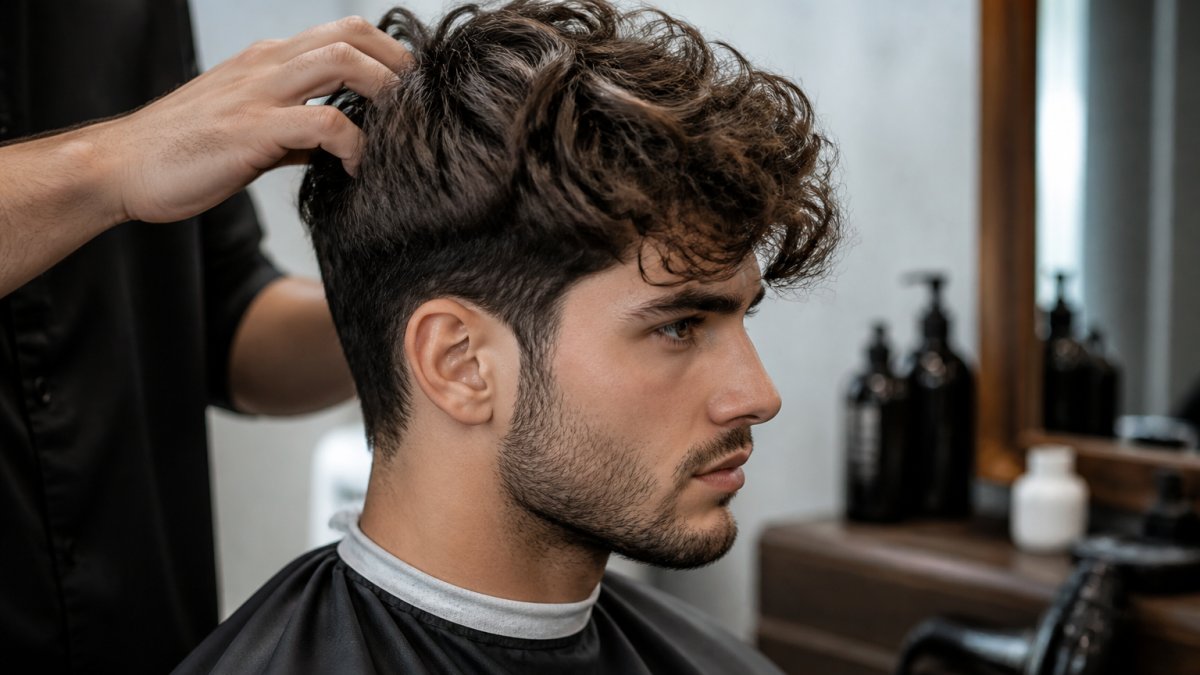
A low fade with curly hair is one of the most flattering combinations for textured hair, because the fade controls the sides while the curls on top keep their shape and volume.
For a professional look, ask for a low or mid fade with the top left long enough to define curls, then use a light cream or leave-in conditioner to control frizz.
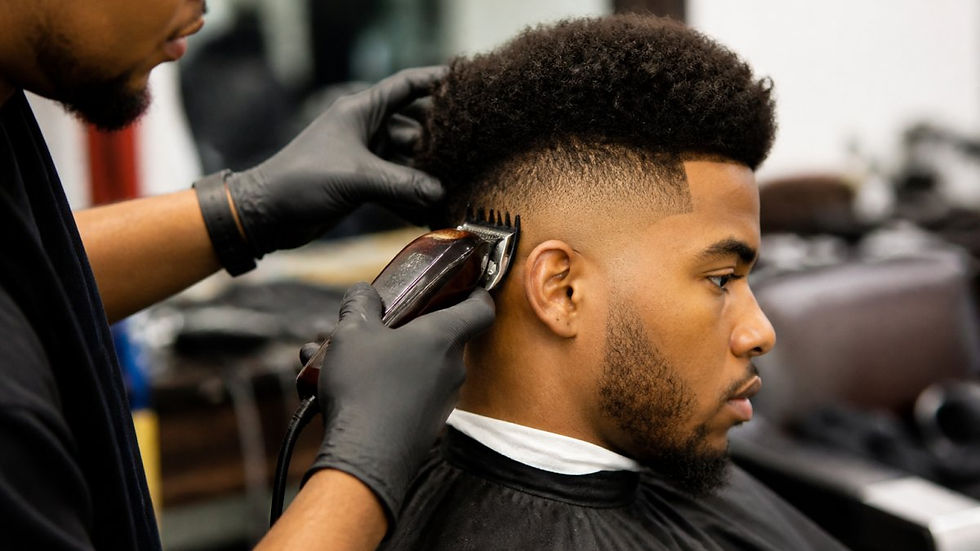
If your hair is tightly coiled, a taper fade around the edges keeps the shape clean without shaving too high.
Watch Out The most common mistake with curly hair is over-fading the sides before the top has enough length. You end up with a tight, unbalanced shape that takes weeks to correct. Grow the top first, then fade.
How to Ask for a Fade Haircut So Your Barber Gets It Right
Knowing how to ask for a fade haircut is half the battle. Vague requests like "just a fade" leave too much to interpretation, and that's how clients end up with a cut they didn't want.
Use specific language and bring a reference photo. Here's a simple script:
"I'd like a low taper fade, scissor-over-comb at the top of the fade, about an inch off the top with a side part on the left. Keep the neckline natural, not squared off."
Add these details to the conversation:
Fade height: low, mid, or high
Fade type: taper, skin, or reverse skin
Top length: in inches or finger-widths
A good barber will repeat the plan back to you before starting. If they don't, ask them to. It takes ten seconds and prevents a month of regret.
Pro Tip Bring two reference photos: one showing the fade from the side and one showing the top from the front. Barbers read height and length much faster from photos than from words.
How Often to Get a Fade Haircut to Stay Interview-Ready
Knowing how often to get a fade haircut keeps you looking sharp without overbooking. For most men, that means every three to four weeks. A low taper fade can stretch to five weeks; a skin fade starts losing its crisp lines around week two. The interval depends on how fast your hair grows, how tight the fade is, and how visible the neckline is in your daily work.
Here is a simple maintenance schedule to plan around:
Fade Type | Touch-Up Interval | Full Cut Interval | Best For |
Classic taper | 4-5 weeks | 6-8 weeks | Conservative offices, interviews |
Low fade | 3-4 weeks | 5-6 weeks | Most professional settings |
Mid fade | 3 weeks | 4-5 weeks | Creative and business casual roles |
High or skin fade | 2-3 weeks | 4 weeks | Relaxed dress codes, weekends |
Timing a Cut Around an Interview or Big Meeting
Book your cut four to five days before the event, not the day before. A fresh fade looks slightly tight for the first two or three days, and the transition softens into its natural shape by day four. Cutting the morning of an interview leaves you with sharp lines that read as brand new, fine in a creative office, slightly severe in a conservative one.
A Low-Effort Workday Styling Routine
The fade handles the sides; your job is the top. A routine that takes under three minutes:
Towel-dry and comb into place while the hair is still damp, following your natural part.
Apply a small amount of product, a matte clay or styling cream for most hair types, a light cream or leave-in conditioner for curls. Avoid heavy pomades and gels; they weigh down the top and make a fresh fade look greasy by midday.
Set the front first, then work back, so the shape you see in the mirror is the shape others see.
Skip the daily wash if your hair feels dry. Rinsing and conditioning two or three times a week keeps texture manageable and makes the top easier to style between cuts.
Between visits, keep the neckline tidy with a light trim and use a matte styling product rather than a heavy pomade. If you have a big meeting or interview coming up, book your cut four to five days ahead so the fade settles and looks natural.
Watch Out The most common maintenance mistake is stretching a skin fade past week three. Once the bald line grows in, the cut stops reading as a fade and starts reading as an overgrown buzz. If your workplace is conservative, a low taper buys you two extra weeks of polish for the same chair time.
Conclusion
The best fades for professional workplace settings are the ones that match your dress code, your hair type, and your maintenance routine. A classic taper or low fade covers most offices. A mid fade adds edge without losing polish.
If you're in Johns Creek and want a fade that holds its shape, book with KOZMIC BARBERSHOP LLC. Our barbers bring 6+ years of experience, precision fade expertise, and classic straight-razor finishes to every chair, so your cut and beard lineup come out exactly as planned.
Frequently Asked Questions
What type of fade is most professional?
A low fade or classic taper fade is the most professional option. The gradual fade starts close to the ears and neckline, keeping hair length on top and at the sides substantial enough for conservative workplaces. A professional low fade haircut reads clean and intentional without drawing attention. Mid fades work in business casual offices, while high and skin fades suit creative or relaxed dress codes. When in doubt, ask your barber for a low taper with a clean transition and crisp lines.
How do you ask a barber for a professional fade?
Bring two or three reference photos and describe the fade height, not just the number. Say something like: low fade starting at the ear, blended gradually, with enough length on top to comb to the side. Mention your workplace dress code and how much contrast you want. Ask the barber to keep the neckline natural rather than squared off if you wear collared shirts. A good barber will confirm the plan before the clippers start, which is how you avoid surprises.
How often should you get a fade touched up?
Most fades look sharp for two to three weeks before the blend softens and the neckline loses its crisp lines. For a professional look, book a full cut every three to four weeks and a quick lineup in between if your schedule allows. Curly hair and faster-growing patterns may need touch-ups closer to two weeks. Regular appointments keep the gradual fade intact and prevent the grow-out phase from looking uneven in a business setting.
Can curly hair have a professional-looking fade?
Yes. A low fade with curly hair works well because the fade stays close to the ears while the curls on top keep their length and shape. Ask your barber to leave enough length on top for the curl pattern to read clearly, and avoid over-thinning the sides. A barber experienced with textured hair will blend the fade so the transition looks natural rather than abrupt. Keep the top moisturized and shaped between visits to maintain a neat appearance.
Book Online
Comments